Finding a Home

Not every little girl dreams of living in an old farmhouse.

Some little girls dream of wide open lofts, exposed brick walls, floor-to-ceiling windows, sharp edges, chrome fixtures, and stainless steel appliances.

But sometimes that little girl may inadvertently marry a dairy farmer and find herself miles and miles from the nearest high-rise apartment building (and civilization in general).

Unlike many newlyweds, I didn’t have a choice when selecting our house. When you househunt with a dairy farmer, you buy a home that is either 1) on land he wants to own or 2) on a farm he wants to own.  The house is just an add-on, an extra; the real selling point for the farmer is the LAND. This was an impossible concept for me to grasp the first time I set foot in what would become our home.

Our house is many, many years older than I. The upstairs has no heat –apparently people in the olden days just slept under piles of blankets and raced downstairs in the morning to change—and the downstairs has no carpet. Originally the walls boasted wood paneling as far as the eye could see.

My first thought when I stepped into our future home was, “Oh Lord. It would be easier to just tear it down.” The house had been standing vacant for three years and it showed. There was a thin layer of dead bugs on the carpet; the water was yellow and smelled like rotten eggs; the wood paneling made the rooms feel dark and claustrophobic. At the end of the tour, I sat down on the dirty floor and cried. This house was not what I had pictured and I didn’t have the foggiest idea how to make it better. The Dairy Man tried to console me, but I hated this house.

I talked in a previous post about raining on the Dairy Man’s parade. Between you and me, it has happened a lot in these first few months of marriage as I try to adjust to all of the life changes. On the day I was weeping on the floor, lamenting the fact that I would be forced to live in this hellhole, the Dairy Man saw opportunity. He recognized the challenges that this old house posed (like um, hello, our refrigerator is in the wall), but he believed that it could be something great.

We would live in this house because it was ON the dairy. My Dairy Man could walk out the door and go to work. He could keep an eye on the cows and the employees at all times. I would see him more because he didn’t have to drive 10 minutes to the farm if something went wrong. This would be our home.

I couldn’t see any of those things at first. All I could see was the chicken wallpaper in the kitchen and the dark wood paneling. But this was going to be our home whether I liked it or not, so it was time to roll up my sleeves and stop complaining.

Home-ownership has proven to be a lot of work. My list of projects is a mile long and we’re not millionaires, people. But we were fortunate to have family and friends who helped us get things started. I’m so appreciative of all the wretched souls who spent hours at our house scouring bathtubs, scraping off wallpaper, sanding wood trim, painting walls, and making dozens of runs to the hardware store. The house will always be a work in progress, but we’ve come a long way.

This is not a home decorating blog. I don’t want that kind of pressure. We are poor newlyweds living in an old farmhouse. It’s better than it was, but it’s still not worthy of Martha Stewart. That being said, I am proud of the process we’ve made. This old house has come a long way. To prove myself, I wanted to share just a few before/after pictures of the rooms that are presentable.

Back entryway before:

Back entryway after:

Kitchen before:

Kitchen in-progress:

Living room before:

Living room after:


Bedroom before:

Bedroom after:

Little by little, things are getting better. Things are starting to look like “us.” For all its imperfections, the house is full of warmth and full of love.

This place has a long way to go, but I finally feel like I’m home.

Our first planting season.

Early last week the Dairy Man sat me down. He took my hand and said, “Well, it’s been fun. We had a great winter and I’ll always remember the time we spent together. But now it’s time to plant. I’ll see you in a few weeks.”

Yes. Sometimes the Dairy Man likes to be dramatic. But after we had a good chuckle, the basic point was still there. He was kidding, but not really. Spring is here and the busy season is off and running.

I wasn’t really aware that we were ever in a “slow” season, but normalcy for farming starts a lot higher than the rest of the world. 60+ hour work weeks are the norm. Busy season means getting up really early, staying out really late, and working like a madman to get as much done as possible before the rain comes. My Dairy Man, his father, and/or my future brother-in-law have been known to still be in a tractor at 11 p.m. at night.

This is my first planting season and I’m still adjusting. I find myself secretly hoping for rain so that I can see my Dairy Man for a few precious minutes. But it cannot rain. We will lose time, or the corn will get into the ground too late and the whole season will be thrown off.

In this small farming community, it seems like every farmer and his brother is driving some type of machinery down a road or through a field. The town is buzzing with activity. On my drive to and from work, a glance to either side of the road reveals fields speckled with shiny metallic tractors and the air is thick with the scent of … fertilizer.

My Dairy Man and his father farm over 600 acres between our two facilities. Every square inch is planted with corn to be ultimately turned into feed for our cows. I don’t claim to be an expert on the intricacies of planting (just when I was finally getting the whole cow thing down, we started an entirely new aspect of farming!), but I’m trying to learn just what my Dairy Man is doing out in those fields all day.

One night I decided to find out. After work, I changed my clothes, pulled on my rubber boots, and set off to find the Dairy Man. I located him in one of the barns and sweetly coerced my way into a ride-along. We climbed into the big red truck and set off to check on the fields.

This particular night it was his father and future brother-in-law sitting in the tractors. Here is my FIL working the ground.

Conversations with the Dairy Man (and extensive research on Wikipedia) tell me that there are four main stages to planting a field: 1) fertilize, 2) chisel plow, 3) disk, and 4) plant.

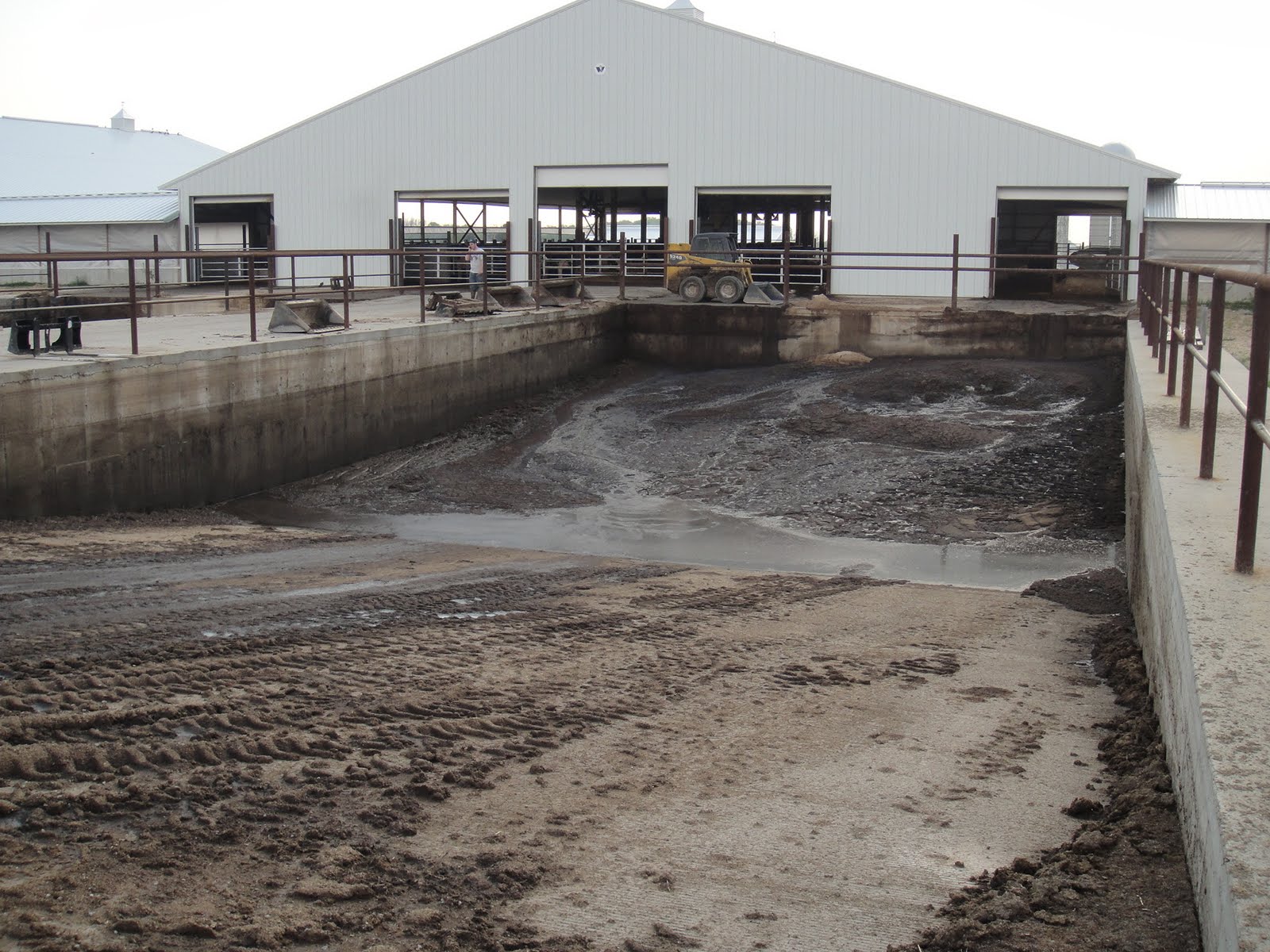
Fertilizing is an easy one to understand. We have many cows. Those many cows produce manure. That manure is stored in pits (like the nearly-empty one below) during the winter and spread on the fields in the spring as fertilizer. How very green of us, eh? Though anyone who lives near a farm will tell you–it stinks to high heaven.

This particular night, I was able to witness the disking portion of the planting process. Now, at long last, I know what this spidery thing actually DOES. Step #2, chiseling plowing, involves another piece of machinery to turn the soil. Using a disk harrow (below) finishes the top of the soil for planting. Not exactly a plow pulled by oxen, is it? Modern farming is big, intense, and involves a lot of giant toys. The Dairy Man still spends hours working the land, but his tractor has air conditioning and satellite radio.

Once the land has been properly fertilized, chiseled, and disked, it’s planting time. Within a few short months, this entire field will be bursting with leafy waves of corn.

So, there you have it. Apparently planting corn does not involve throwing handfuls of seeds into an open patch of dirt. Who knew? Though that does explain why I haven’t seen the Dairy Man for more than twenty minutes per day in the past week. It hasn’t been easy being a planting widow, but I know that this craziness won’t last forever. And a long hug in the morning can get me through just about any kind of craziness.

(And yes, I am aware of just how awesome my rubber boots look with shorts.)

That’s just not natural.

It’s the age-old question: “Tell me, Dairy Man, where do cows come from?”

To find the answer, the Dairy Man forced encouraged me to watch the “Dairy Cow Midwife” episode of Dirty Jobs. Needless to say, my delicate sensibilities will never be the same.

I may be a farm wife, but there are certain aspects to my husband’s job that I don’t want to know anything about. Before that fateful episode of Dirty Jobs, I had some vague ideas about artificial insemination but had always managed to push those disturbing thoughts out of mind. The less I knew the better. I wouldn’t be forced to ask questions I didn’t want the answer to, such as “WHERE does the breeder stick his arm?!?”

The process of birds and bees on a dairy farm is not quite like it used to be. Dairy farms of old had a bull or two running around the farm to turn on the charm and make cow babies.

But in modern dairy farming, this method of reproduction is highly inefficient. Or so the Dairy Man tells me. You can’t control genes, desirable traits, success rates, milk production. Because, of course, we want super-awesome high-producing wonder cows. Bulls are dangerous and modern farming can do better. We don’t want just any Joe Bovine impregnating our ladies.

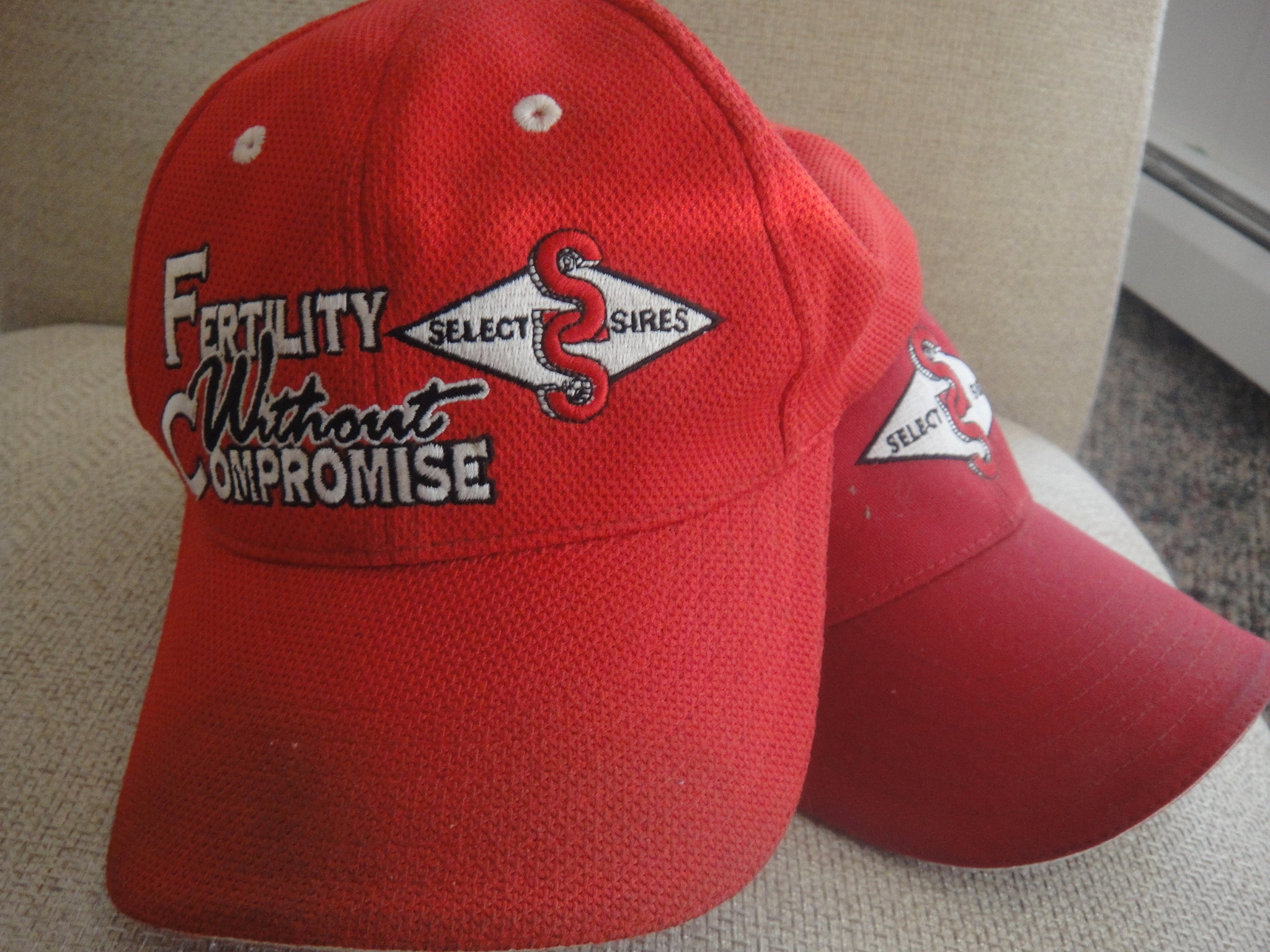
So, what’s a farmer to do? Buy high-quality sperm for use in artificial insemination of course. Yes. There are entire companies dedicated to the sale of baby-making liquid for cattle. And the Dairy Man wears their hats.

This knowledge is an example of a fact I wish I didn’t know. But alas, one cannot be a dairy farmer’s wife without losing some innocence. I also know where hamburgers come from. Traumatizing, eh? Welcome to my life.