A Hairy Situation: How My Husband Almost Destroyed my Washer

Three important facts you need to know before I begin this rant:

  1. The Dairy Man has a habit of leaving dirty towels around the house.
  2. The Dairy Man cuts his own hair.
  3. I love my husband.

Let’s begin, shall we?

As the wife of a farmer, most household tasks fall to me. This was one of the first things I had to accept when we got married. It’s not because I’m a guileless victim to my gender, I just happen to have more time. And frankly my standards are higher. If left to his own devices, the DM would live in squalor and eat nothing but Frosted Mini Wheats. At least that’s what I suspect.

One of the Dairy Man’s more irksome habits is leaving a trail of items—socks, flannel shirts, shoes, towels—in his wake as he putters around the house. I always allocate time on laundry day to collect these wayward articles.

I was on such a mission on Monday. After tracking down all of the dirty towels in the house, including an innocuous green towel balled up next to the washing machine, I started a load of wash while I made dinner. I was feeling good. Productive. Like a modern day Marsha Brady with a full-time job and a college degree. When the washing machine timer dinged, I headed to the back room to throw the towels into the dryer.

As soon as I opened the door, I knew something was terribly wrong. The inside of the machine looked like a bunny had exploded, leaving little piles of brown fur everywhere.
______________________
Before I go on, let’s back up.

A few days ago, the DM decided to give himself a haircut. He laid a towel on the bathroom floor and went to town on his head with an electric shaver. After he was properly shorn, DM rolled the hair clippings up into the towel and headed to the back room.

MFW: Babe, make sure you shake out that towel outside before you put it in your hamper.

DM: I will!

MFW: Well, it’s just that last time you balled the towel up in the bottom of your hamper and I washed it and hair got everywhe…

DM: (Interrupts) I got it! I’ll take care of it. ______________________

Fast forward to the next day. Me. Standing in front of my washer. Horrified.

The DM listened; he didn’t put the hair-filled towel in his hamper. He rolled it up, placed it next to the washer, and thought “I’ll take care of that later.”

Except he forgot.

I spent the next 10 minutes wiping piles of brown hair from the washer drum, filter, and rubber seal. The hair-covered towels were thrown into the dryer and I stopped their tumbling every few minutes to empty the filter. When all was said and done, it looked like a small furry animal had taken up residence in my trash can.

Kids: marriage is always glamorous, logical, and grown-up. Wait, no. I lied. It can be messy, frustrating, and silly.

But thankfully, even under all of the hair, there is still a lot of love.

XOXO,

MFW, chinchilla wrangler
Corn Harvest In 6 Steps

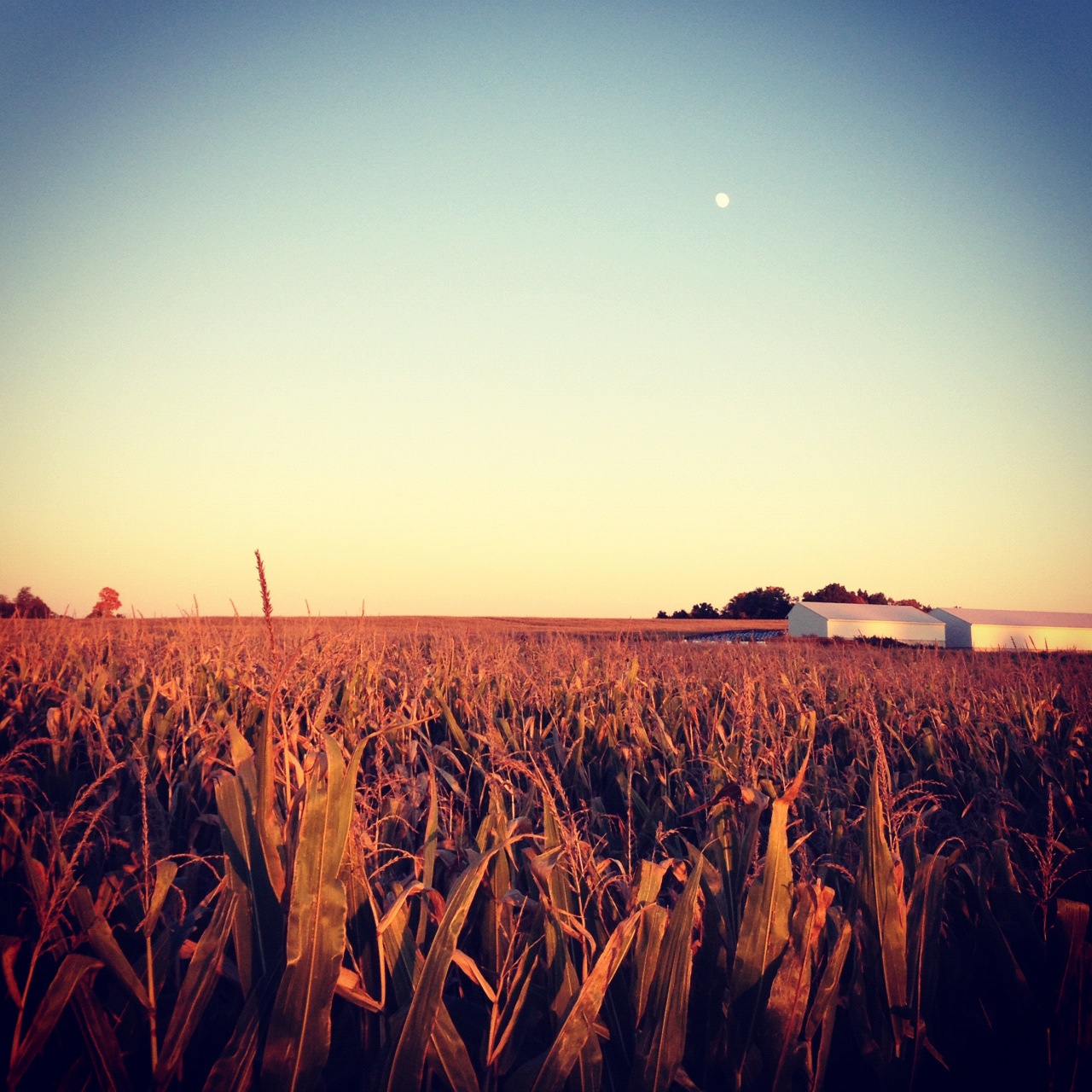
Well, it finally happened. I dug my fluffy winter coat out of storage yesterday. Alas and alack; it’s cold in Michiganland. I know this weather is nothing compared to what I can look forward to in December, but I’m waving the white flag on sandals, short sleeves, and coatless workdays.

The cool fall air signifies the end of a lot of things: corn harvest, watering the grass, suntans, dinner on the deck, shaving my legs. It also signifies that I absolutely must fill you in on the corn-ish happenings around the farm in the last month or so.

Thus, before I launch into a late-fall tirade of apple cider, football games, and pasty white Dutch skin, let’s take a look in the rear-view mirror to corn harvest. I give you:

Corn Harvest in 6 Steps
Step 1: Accept sleep deprivation and bad wife-ery
Step 2: Bring in the harvester and chop! that! corn!
Step 3: Build the pack (and fill the bags)
Step 4: Cover the pack
Step 5: Harvest shelled (high moisture) corn
Step 6: Take a nap

Step 1: Accept sleep deprivation and bad wife-ery
My Dairy Man gets in around midnight each night during corn harvest. Between you and me, I don’t even notice anymore. During my first corn harvest, I would abruptly spring into consciousness as soon as the DM got home. This year—my third corn harvest—I found it startlingly easy to go (and stay) asleep without the husband next to me. Some call it bad wife-ery, I call it a coping mechanism. After over two years of marriage in the shadow of farming, I’ve gotten pretty good at sleeping through late nights, 3 a.m. phone calls, and power outages. As for the Dairy Man? He entered a zombie-like state somewhere in the second week of harvest and didn’t snap out of it until late September.

Step 2: Bring in the harvester and chop! that! corn!
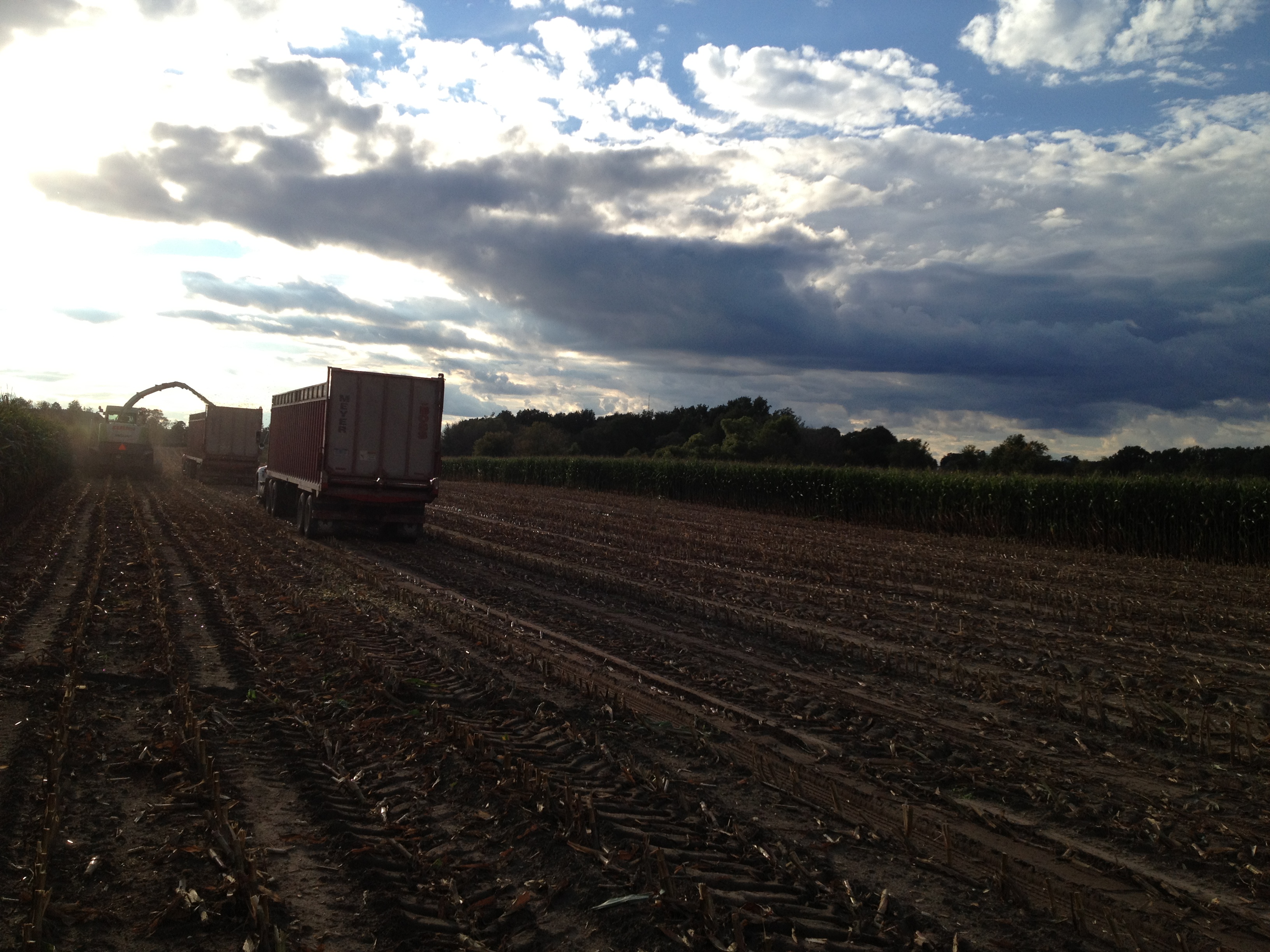
Imagine that last part being as exciting as “move! that! bus!” It’s Extreme Home Makeover: Cornfield Edition. Each year we hire an outside company to chop our corn. Max the friendly chopper and his intrepid crew drive a machine called a harvester through the fields. Trucks follow along to collect the chopped corn.

A forage harvester (a.k.a. silage harvester, forager, or chopper) chops the entire corn plant into silage. Corn silage is just a fancy way to say “chopped up corn.” And I realized this year that a lot of farmers put silAGE into a siLO. Whoa. Do you think that’s where the word “silo” came from? I think yes. Silage in the silo. Don’t underestimate the gravity of this realization. When I finally figured it out, you would think I had invented butter. It was like the day I realized cows give milk because they’d just had a calf. Earth-shattering stuff.

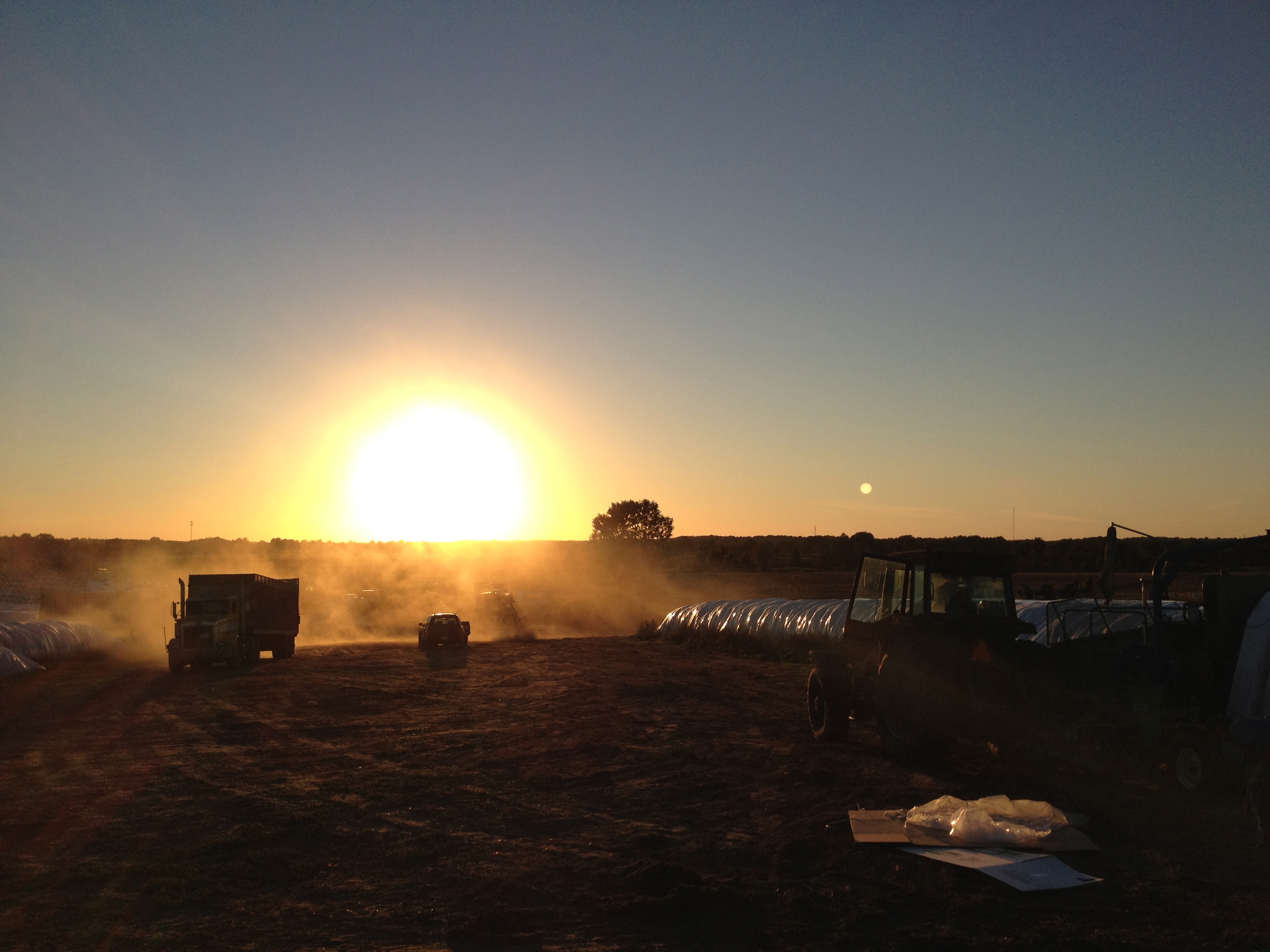
Anyway. The chopper mows down the corn and blows the silage into trucks. The trucks drive from the field to the dairy and dump the silage on the PACK.

Step 3: Build the pack (and fill the bags)
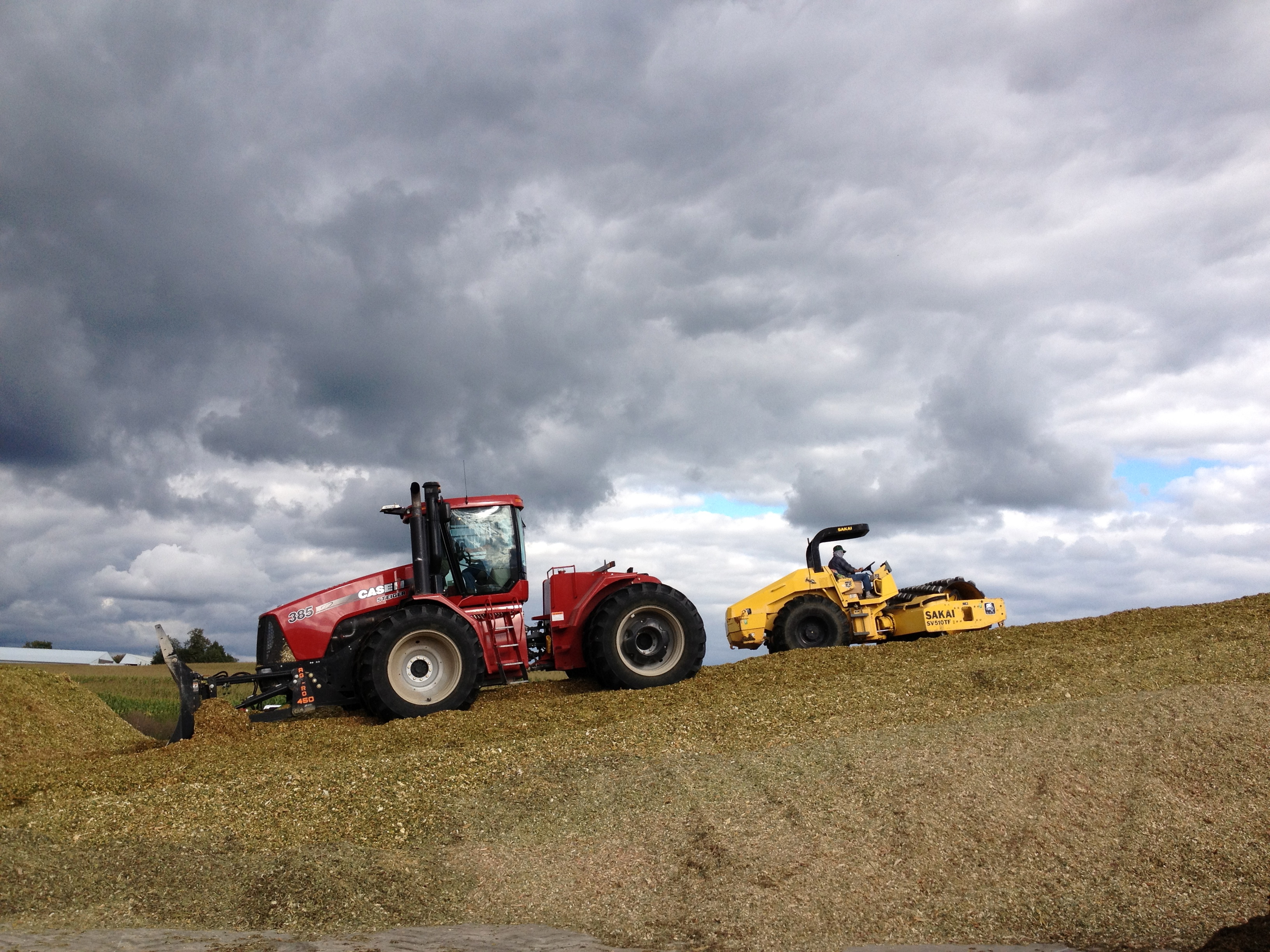
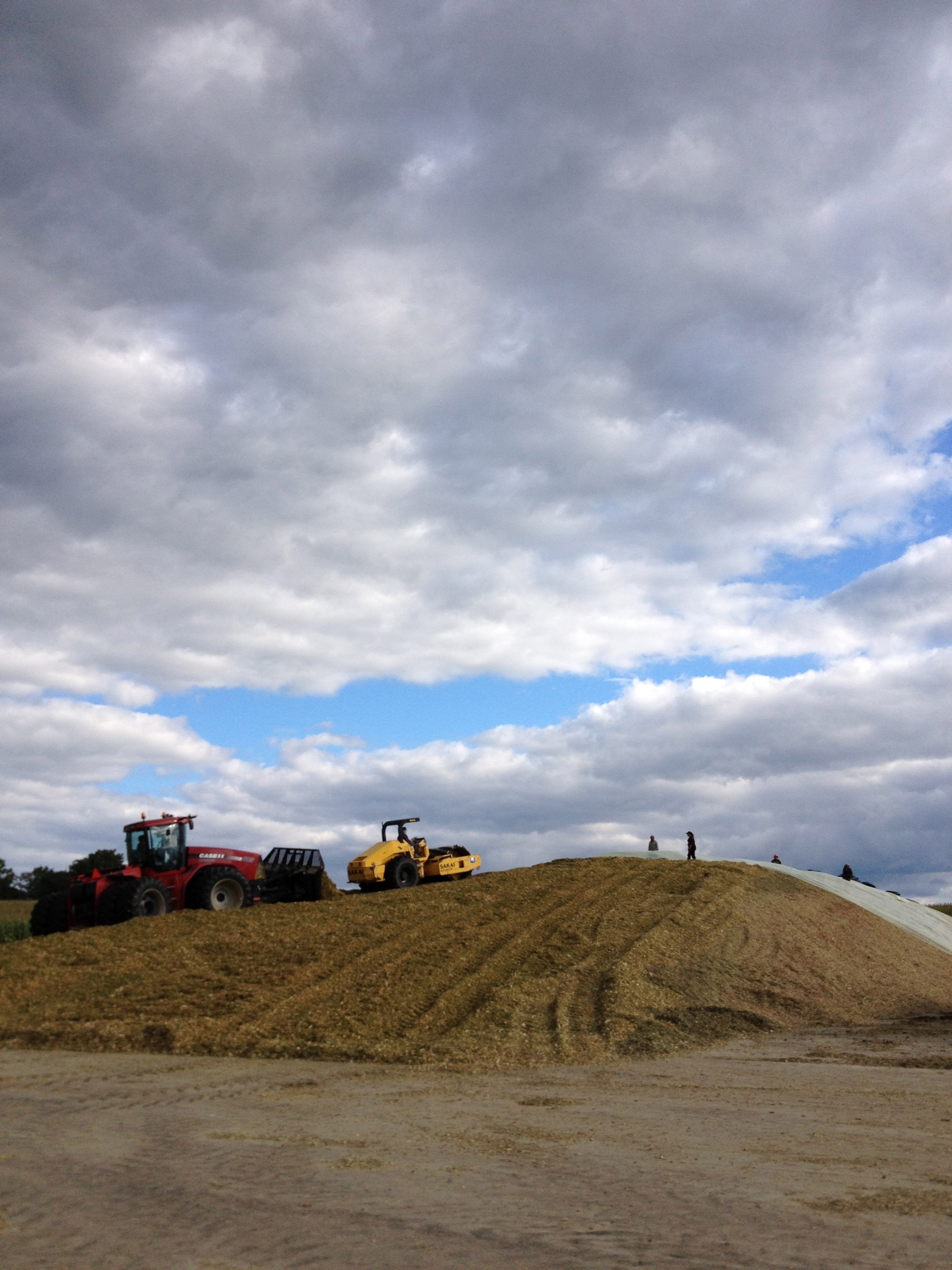
After the trucks dump their loads of silage, tractors are waiting to push the piles up the pack (how’s that for alliteration?).

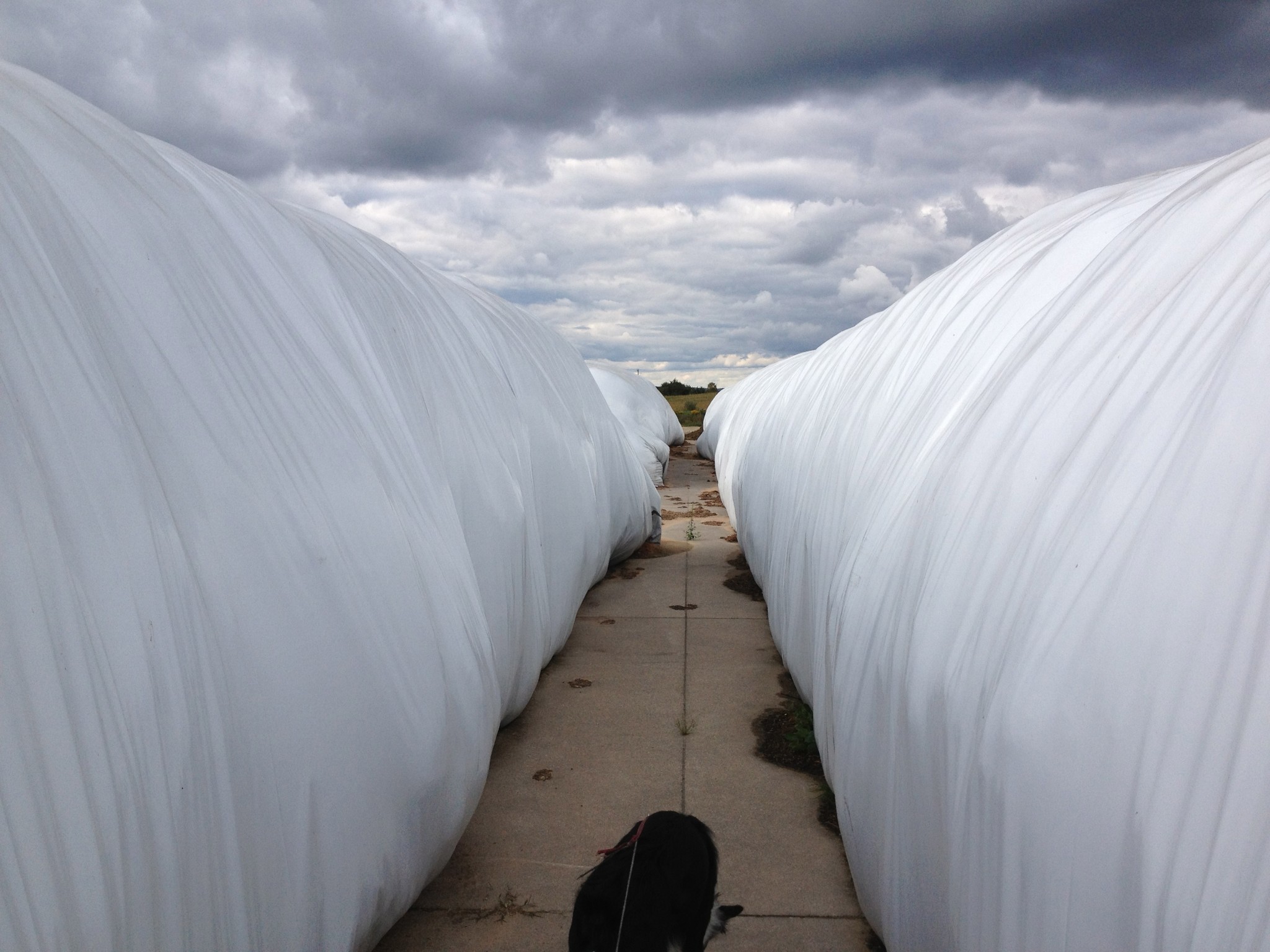
We squirrel away corn silage in two ways: giant packs and tubular ag bags. Ag bags are easier to seal and maintain; packs are more space efficient. This year we put up two large packs AND filled a bunch of ag bags. We like to keep things interesting.

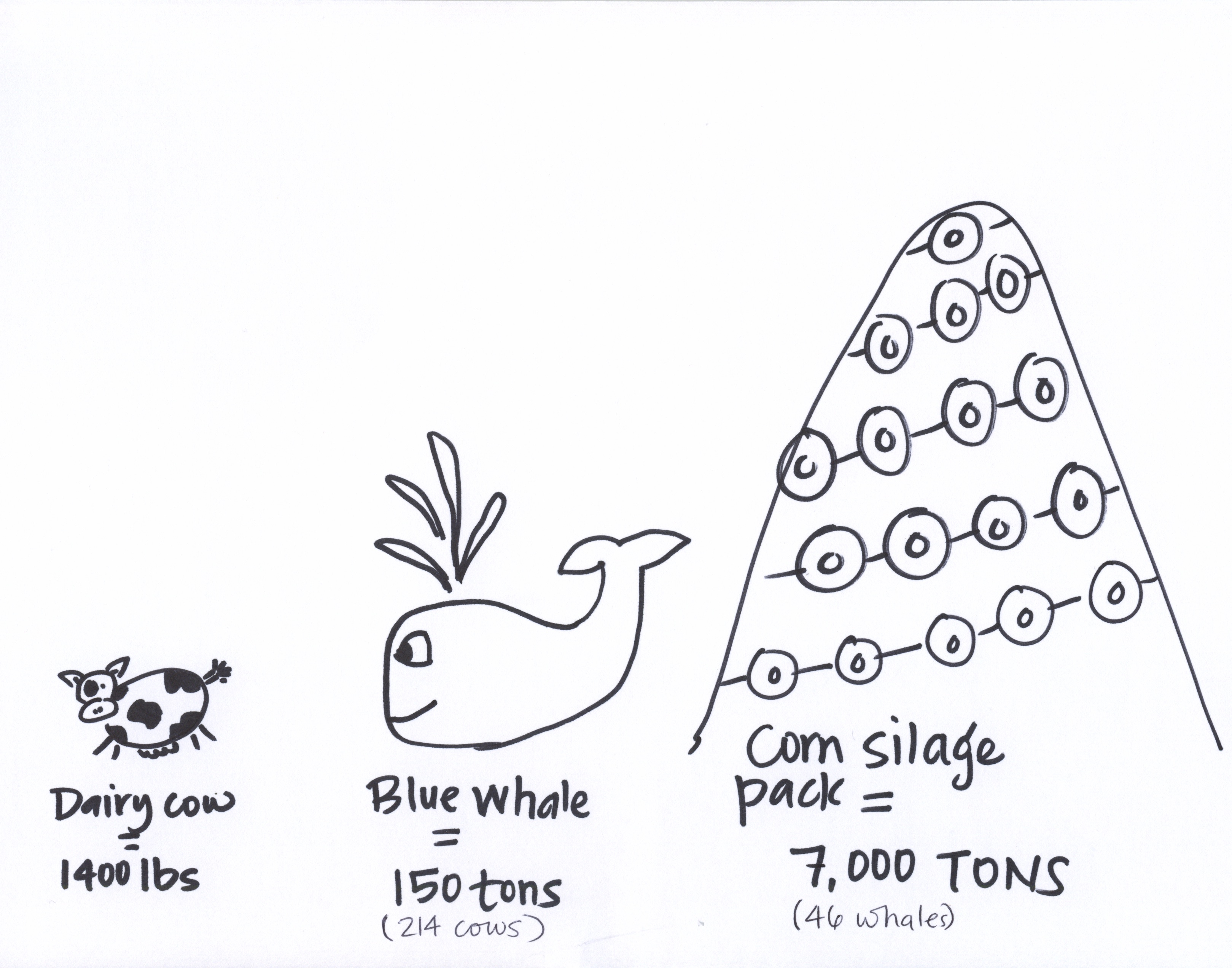
Last year I explained the process of packing corn silage. Each pack this year contains almost 7,000 tons of silage and took approximately a week to build, compress, and cover.

Can’t get your head around 7,000 tons? For reference, the average adult blue whale weighs around 150 tons. Just imagine 46 blue whales flopping around behind our dairy. Now there’s a mental image not often associated with dairy farming. I’ve included this artistic and highly-scientific diagram to help you make the jump:

Between packs and bags, we put up approximately 16,000 tons of corn silage this year, or 106 whales. (No whales were harmed in the making of this example; we released them into Lake Michigan.)

Corn silage from harvest 2012 will feed our bovine ladies for the next year. And parents complain about the cost of feeding their kids. Geeze. You can’t buy Canned Cow Corn at Costco.

Step 4: Cover the pack
After a pack is built and compacted, we cover the entire monstrosity with huge pieces of thick plastic and thousands of sliced tires.

The tires hold the plastic down and ensure that no moisture or oxygen gets into the pile. They also serve as stepping stones if certain modern farm wives decide to climb to the top of the pack. King of the mountain, anyone? Just don’t fall into the manure pit.

We will uncover the pack bit by bit over the next year to feed our ladies.

Step 5: Harvest shelled (high moisture) corn
This step is currently in process on our dairy. A few fields have purposefully remained unscathed during Corn Chop 2012.

The corn stalks in these fields are left to completely dry out and the Dairy Man goes through a few weeks later to harvest shelled corn. While corn silage is comprised of the entire corn plant, shelled corn is just the kernels. Both silage and shells are used in our feed rations. And both types get tracked into my house on DM’s boots. I promise to drop some thrilling shelled-corn-knowledge on you in my next post. BAM.

Step 6: Take a nap
When the corn is harvested, the cover crops are planted, and all of the cows are starting to grow their furry winter coats, reacquaint yourself with family, friends, and puppies. At long last, my Dairy Man will slip into hibernation. Winter is almost here.